How many commercial EV chargers does a property need?
Start with a clear number, then work through the details
There is no single magic number that fits every property. The right count for a commercial EV charger installation depends on parking capacity, tenant demand, utility service limits, and how the chargers will be used day to day. A good rule of thumb is to install enough chargers to cover the expected peak usage without overbuilding the electrical infrastructure to a point that makes the project uneconomical. Most properties begin with a site assessment that looks at the parking lot layout, the load profile of the existing building, and the type of access control or networked charging system planned.
A common starting point for many commercial properties is to equip about 5 to 10 percent of total parking spaces with EV chargers. A lot with 100 spaces might start with 5 to 10 charging stations. That range works well for early adoption and keeps upfront costs manageable. But the real answer depends on several factors that property owners should weigh carefully before finalising any installation plan.
Parking capacity and how the lot is used
The number of parking spaces is the most obvious factor, but how those spaces are used matters just as much. A retail parking lot where customers stay for an hour or two has different charging needs than an office parking lot where employees park for a full workday. A property with 200 spaces that serves a mix of short-term visitors and long-term employees might need more chargers than a similar-sized lot used only for quick stops, because the longer dwell time means each charger can serve fewer vehicles per day.
Parking capacity also affects where chargers can go. If the lot has dedicated spots near the building entrance, those are prime locations for EV charging because they minimise cable runs and make the chargers visible. But if the lot is spread out or has awkward access points, some spaces may be impractical to wire up. A site assessment maps these constraints and helps determine how many chargers can be installed without major civil work.
Tenant demand and future-proofing
Tenant demand is the other side of the coin. A property with existing tenants who already drive electric vehicles will need more chargers sooner. Property managers can survey tenants to gauge current and near-future interest. For new developments or properties with few current EV drivers, it still makes sense to install some chargers and, more importantly, to run conduit and wiring that can support additional chargers later. This approach, sometimes called future-proofing, avoids the cost of tearing up the parking lot twice.
Demand is not just about the number of EVs today. Adoption rates vary by region, but in many parts of the Bay Area, the share of EVs on the road is growing quickly. A property that installs too few chargers now may find itself short in just a couple of years. On the other hand, installing too many chargers upfront can strain the budget and leave equipment underused. The sweet spot is usually a phased plan: install a baseline number now, and leave capacity in the electrical system for expansion later.

Utility service and load profile
The existing utility service to the property sets a hard limit on how many chargers can be added without upgrading the main electrical service. Every charger draws power, and the building already has its own load from lighting, HVAC, elevators, and other equipment. A load profile analysis calculates the total electrical demand at different times of day and determines how much spare capacity exists.
If the building has little spare capacity, the owner may need to upgrade the transformer or the main switchboard. That can be expensive, so many properties choose to install a smaller number of chargers initially and add a load management system. Load management systems, sometimes called EV energy management systems, dynamically adjust the charging speed of each station based on the building's real-time load. This allows more chargers to share a limited service capacity without tripping the main breaker. It is a practical way to get more charging points without a major utility upgrade.
Utility companies also have their own requirements. Some require a service application for any new charging load above a certain threshold, and the review process can take weeks or months. Understanding the utility's rules early in the planning stage avoids delays.
Access control and networked charging
How the chargers will be managed affects how many you need. A property that offers free charging to tenants and visitors will see higher usage than one that charges per kilowatt-hour or per session. Chargers that are open to the public may attract drivers from outside the property, which can increase demand beyond what the tenant base alone would suggest.
Networked charging systems provide data on usage patterns, which helps property owners adjust the number of chargers over time. They also allow for access control, so only authorised users can plug in. This is useful for properties that want to reserve charging for tenants or employees. Some systems even let you set different pricing for different times of day, which can shift demand away from peak hours and reduce the total number of chargers needed.
A property with a robust access control system and a well-designed pricing model might need fewer chargers than one that offers free, unrestricted charging, because the system can encourage shorter sessions and more turnover. But the trade-off is that users may find it inconvenient if the system is too restrictive. The goal is to balance access and control so that the chargers are used efficiently without frustrating the people who rely on them.
Phased installation and the role of a site assessment
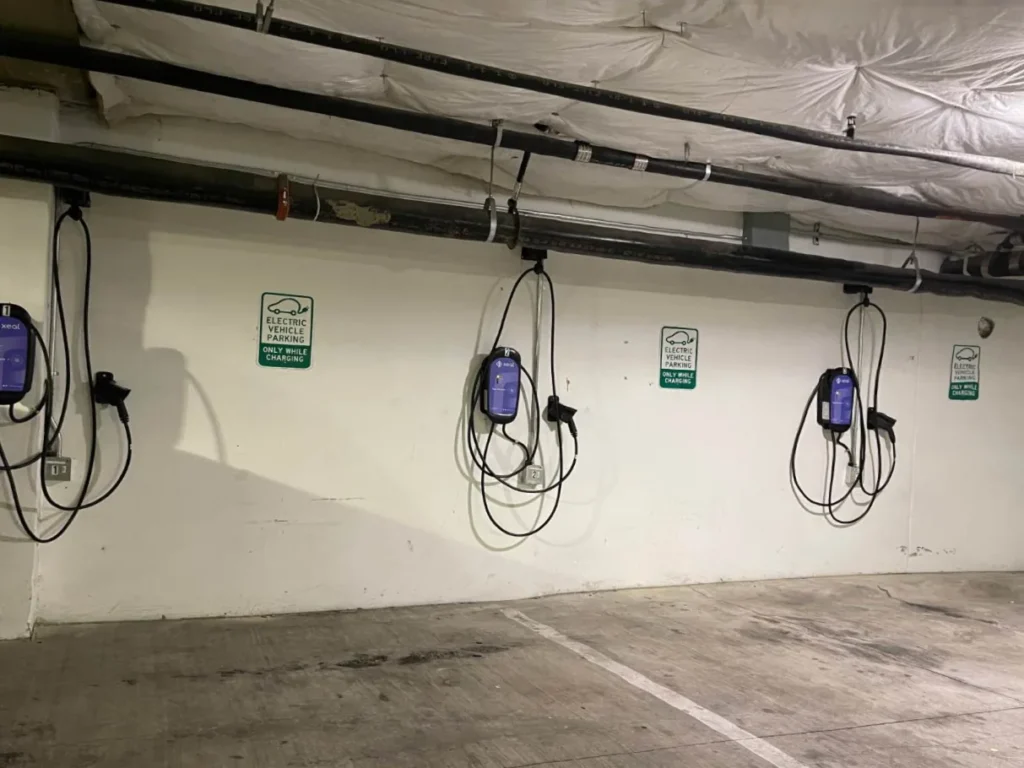
A site assessment is the single most important step in determining the right number of chargers. It combines all the factors discussed above into a concrete plan. An electrician or an engineering firm evaluates the parking lot, the electrical panel capacity, the transformer size, the conduit paths, and the utility service. They also consider the type of charger, the cable management, and the mounting options.
For many commercial properties, a phased approach works best. Phase one might cover 5 to 10 percent of parking spaces with Level 2 chargers, plus the infrastructure to support future expansion. Phase two could add more chargers as demand grows, without needing to dig up the parking lot again because the conduit and wiring are already in place. This approach keeps initial costs lower while ensuring the property can scale up when needed.
When planning a commercial EV charger installation, it is wise to consult a licensed electrical contractor who understands local codes and utility requirements. Wooding Electric installs home and commercial EV chargers, dedicated circuits, and related electrical infrastructure in San Jose and the surrounding Bay Area, and can help property owners assess their specific needs. Their team can perform a site assessment and recommend a charger count that fits the property's current situation and future plans.
Practical considerations for different property types
Different types of commercial properties have different charging needs. Here are a few common scenarios:
- Office buildings: Employees park for long hours, so each charger can serve only one or two vehicles per day. Aim for 10 to 20 percent of parking spaces, especially if the building has a high number of commuters.
- Retail and restaurants: Customers stay for short periods, so a smaller percentage, say 5 to 10 percent, often works because turnover is higher. Focus on visible, convenient spots near the entrance.
- Multifamily residential: Tenants charge overnight, so each charger typically serves one vehicle per day. For apartment complexes, 10 to 20 percent of parking spaces is a common starting point, but tenant surveys can refine the number.
- Hotels: Guests charge overnight, similar to multifamily, but the demand can vary by season. A phased approach with a load management system is often a good fit.
Each property type also has unique regulatory requirements. Some local jurisdictions require a minimum number of EV-ready spaces for new construction or major renovations. Checking with the local building department early in the process is essential.
Balancing cost and convenience
Installing too few chargers can lead to frustration among tenants and visitors who cannot find an available spot. Too many chargers can sit idle, wasting capital. The right number sits in the middle, and it is different for every property. The best strategy is to start with a conservative number based on a thorough site assessment, install the infrastructure for expansion, and monitor usage data to decide when to add more.

Load management systems and networked charging make this balancing act easier. They allow a property to install more chargers than the electrical service would otherwise support, and they provide the data needed to make informed decisions about future expansion. For properties that expect rapid EV adoption, this is especially valuable.
Ultimately, the number of commercial EV chargers a property needs comes down to its specific parking capacity, tenant demand, utility service, and how the chargers will be managed. A well-planned installation with room to grow will serve the property well for years to come. Wooding Electric has the experience to guide property owners through this process, from the initial assessment to the final installation, ensuring that the charging infrastructure meets both current and future needs.